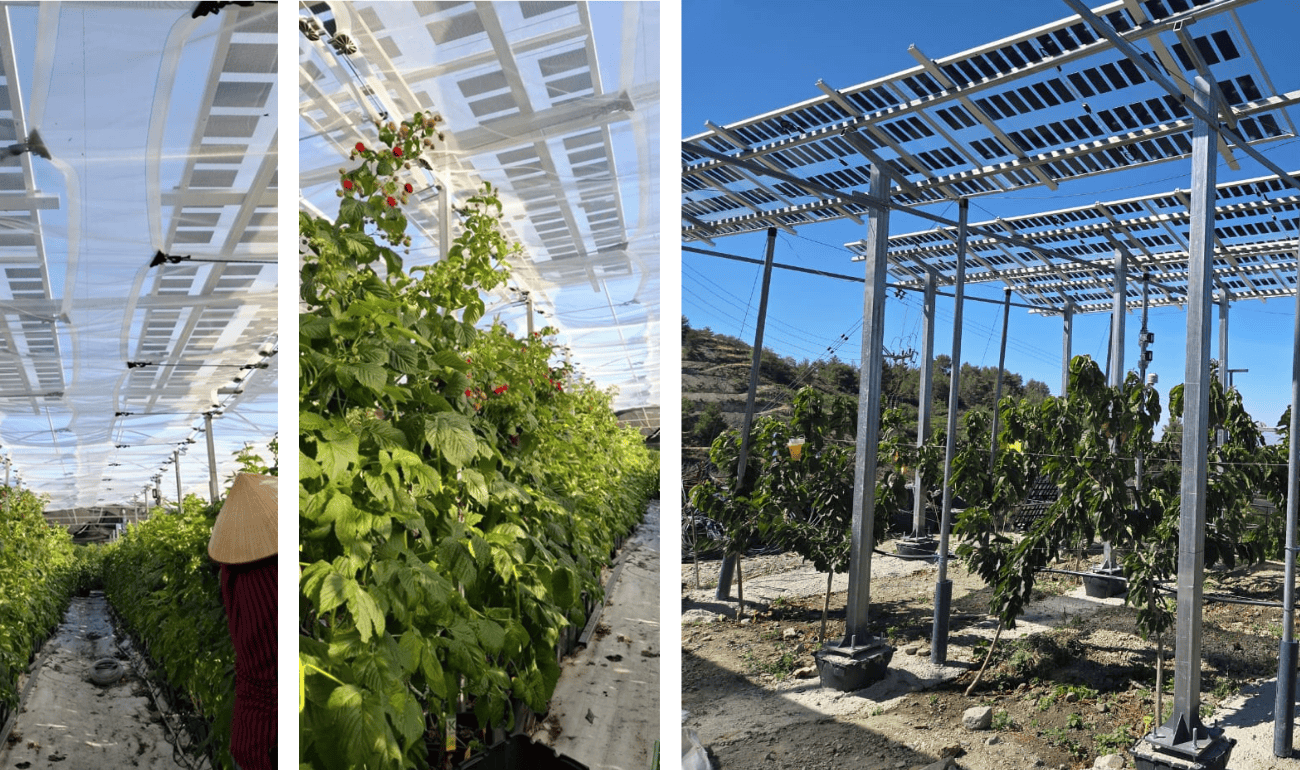
Agri-PV in Open Field Raspberry Cultivation
Agrivoltaics raspberry cultivation in Cyprus
What is Agrivoltaics?
Agrivoltaics is the practice of using the same land for both crop cultivation and solar energy generation. Semi-transparent solar panels allow sunlight to reach the plants while producing electricity.
Semi-Transparent Solar Panels Over Berry Production
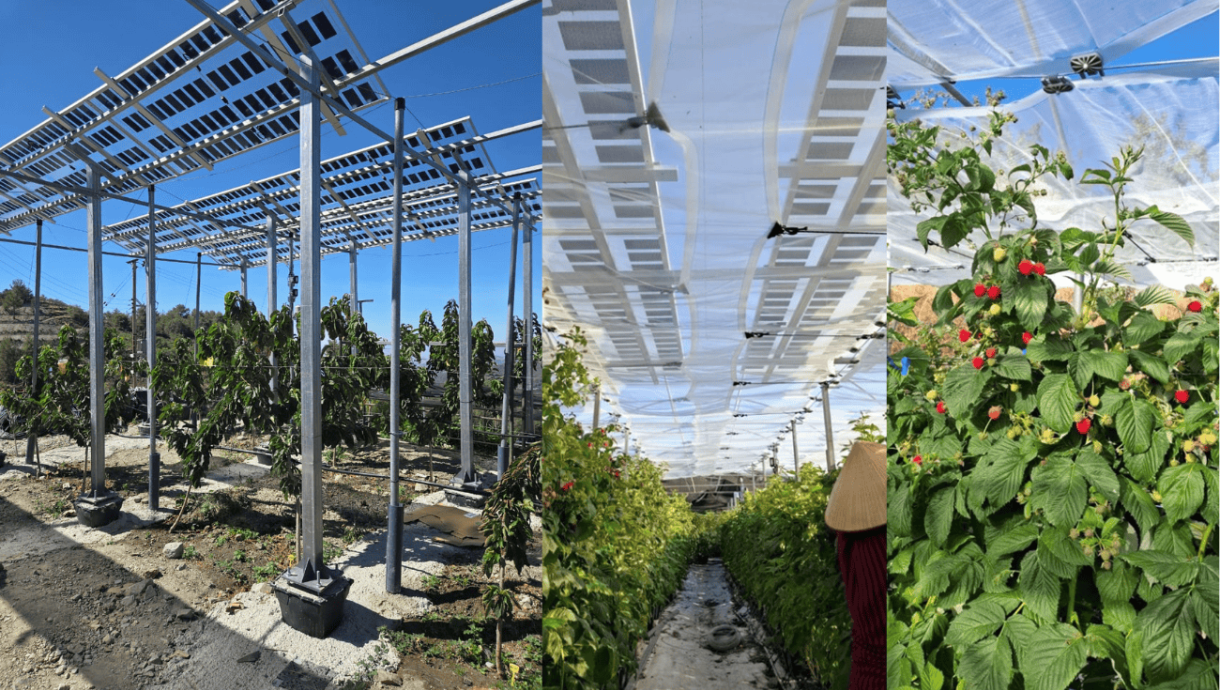
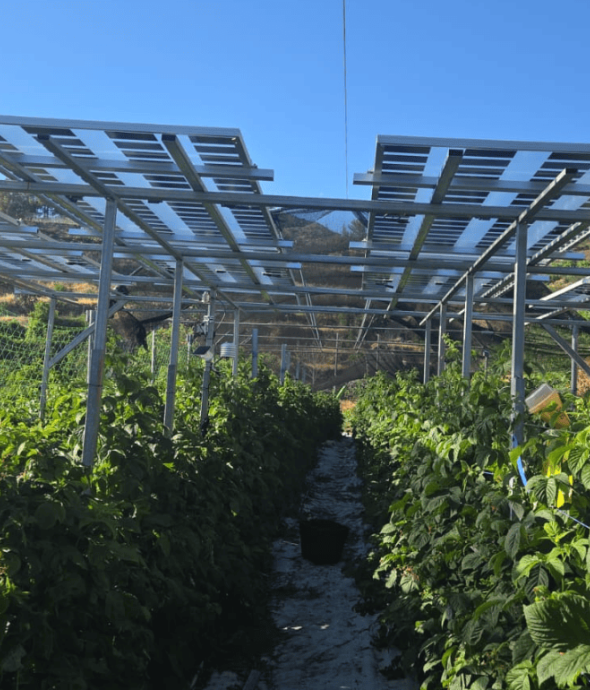
This project marks the first agrivoltaics raspberry cultivation system in Cyprus, combining agricultural production with renewable energy generation on the same land. Developed by Mountain Berries Pitsilia (MBP) as part of the FarmPV project funded by the European Union, through the Research and Innovation Foundation of Cyprus. Agrivoltaic installation demonstrates how Agri-PV systems can support Mediterranean agriculture while improving farm sustainability and resilience. The system consists of 37 semi-transparent photovoltaic panels with a capacity of 300 Wp each and a light transparency of 54%, installed above raspberry crops. The elevated solar structure allows farming activities to continue underneath while generating renewable electricity.
By integrating solar panels directly into the farming environment, the project shows how modern agriculture can produce food and energy simultaneously while improving growing conditions for sensitive crops.
Technology Overview
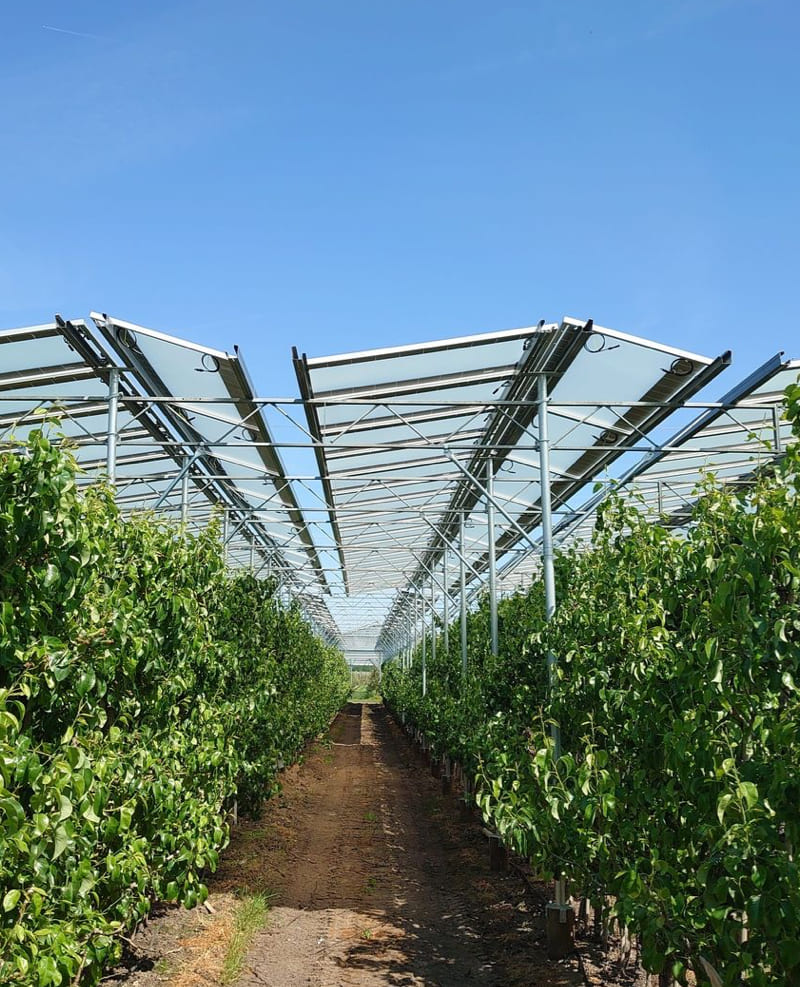
The agrivoltaic installation uses semi-transparent photovoltaic modules designed to allow part of the sunlight to reach the plants while converting the remaining solar radiation into electricity. With a transparency of 54%, the panels provide balanced shading while maintaining sufficient light for plant growth. This dual function enables agricultural land to be used more efficiently while maintaining productive cultivation underneath the solar structure. The elevated design allows normal farming operations beneath the panels, controlled shading during peak sunlight hours, and renewable energy production directly at the farm.
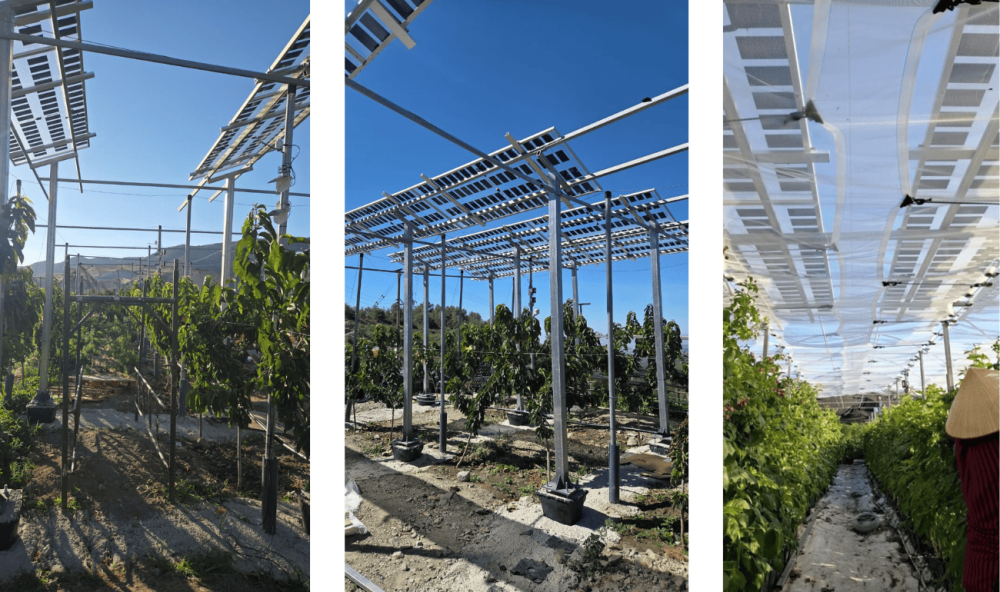
Agrivoltaics Benefits for Raspberry Cultivation
Raspberries are considered heat-sensitive crops, particularly under Mediterranean climatic conditions where extreme temperatures can stress plants and reduce fruit quality. The project demonstrates how agrivoltaics raspberry cultivation can improve microclimate conditions and crop resilience under Mediterranean climate conditions. Observations from the project indicate a considerable increment in yield, particularly during the summer period when heat stress typically affects raspberry production. This increase is attributed to the more favourable microclimate created by partial shading from the solar panels during temperature extremes. The installation also contributes to reduced thermal stress on the plants, improved fruit quality, reduced fruit damage, higher water-use efficiency due to lower evapotranspiration, and optimized light conditions for raspberry cultivation under Mediterranean conditions.
Dual Land Use in Practice
This project demonstrates the practical application of dual land use agriculture, where the same agricultural plot is used simultaneously for agricultural production and renewable electricity generation. Instead of replacing farmland, agrivoltaics allow farmers to integrate solar energy production into existing farms while maintaining crop cultivation. This approach increases land productivity and supports the transition toward more resilient and sustainable farming systems.