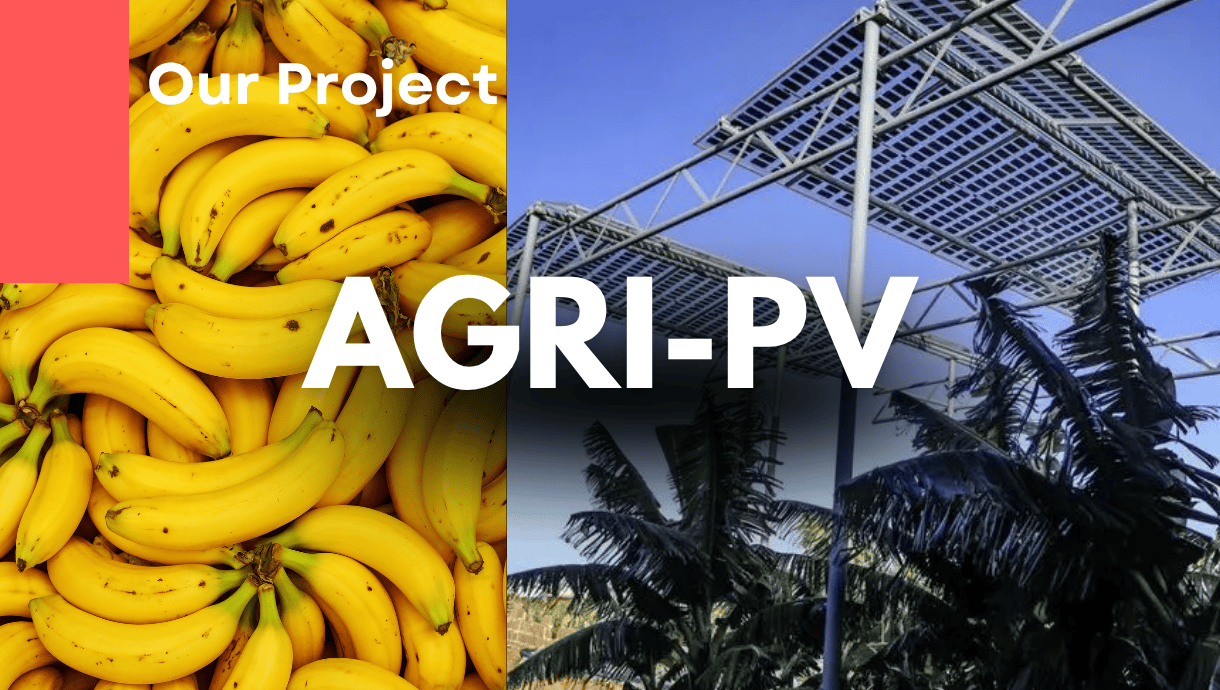
What if a banana farm could grow crops and generate solar energy at the same time? That's exactly what is being planned at Finca Rosita in Gáldar, Gran Canaria. Brite Solar's technology is at the heart of an agrivoltaic banana farm that is set to redefine sustainable agriculture in the Canary Islands.
This project isn't just a local story. It is real-world proof that agrivoltaics can work at commercial scale, in challenging climates, on some of the world's most water-sensitive banana crops.
What Is an Agrivoltaic Banana Farm?
An agrivoltaic banana farm combines solar panel installation with active crop production on the same piece of land. Instead of choosing between farming and energy generation, both happen simultaneously.
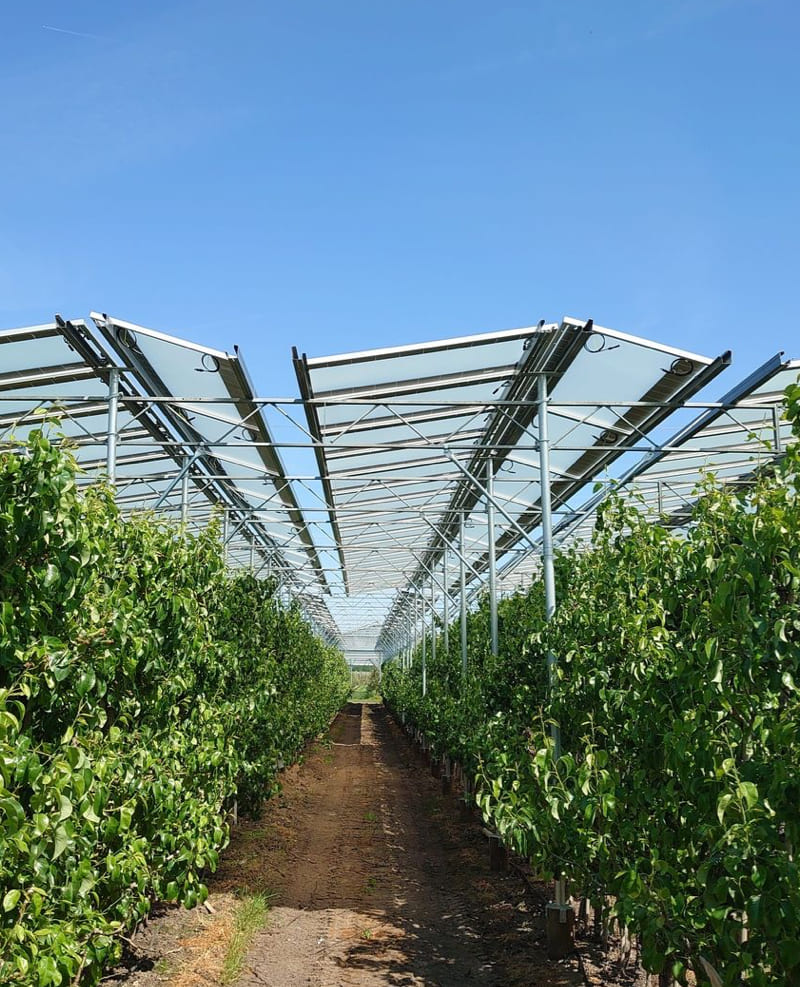
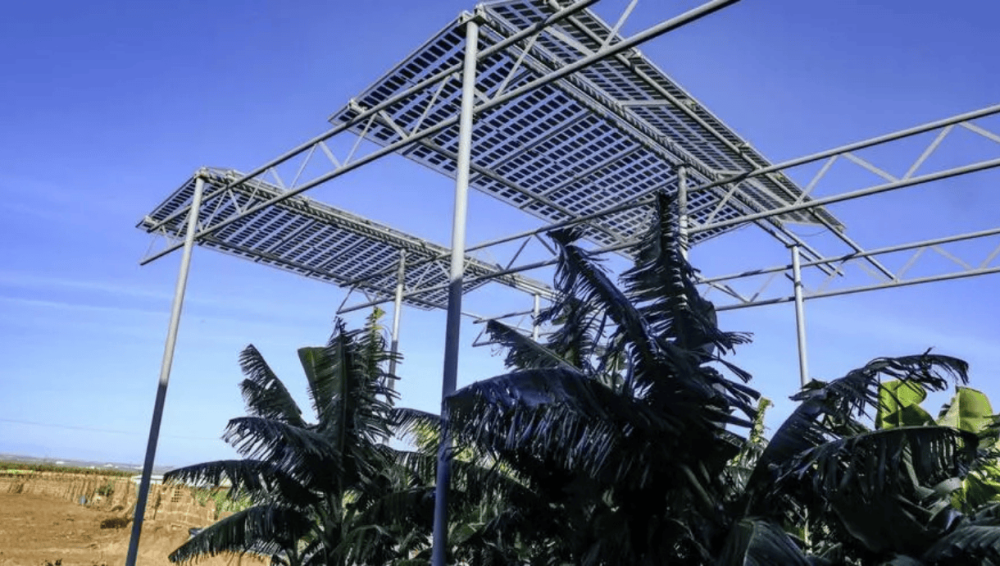
In traditional solar farms, agricultural land is taken out of production permanently. Agrivoltaics challenges that model entirely. The panels are designed to be mounted high enough to allow banana crops to grow underneath, while the shade they provide is expected to improve growing conditions for certain plants, including bananas.
According to peer-reviewed research, agrivoltaic systems can increase land productivity by up to 70% compared to separate land uses for agriculture and solar energy.
The Finca Rosita Project: Key Facts
Grupo FSM, one of the Canary Islands' leading agricultural groups with over 60 years of experience, is launching this agrivoltaic project at their Finca Rosita estate in Gáldar, Gran Canaria.
Here are the numbers that matter:
- 7,150 m² total project area
- 1,754 solar panels to be installed at 6 metres height
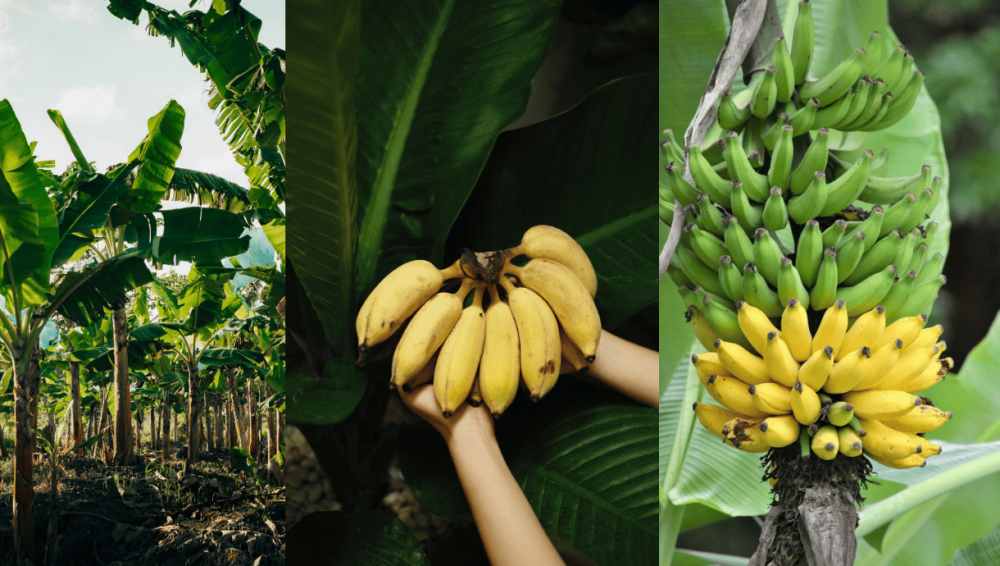
- 1,500 banana plants to grow underneath
- 745 MWh per year of clean energy expected to be generated
- Projected 40% reduction in water consumption
- Expected 2% increase in banana productivity (from 58.8 to 60 tonnes per hectare)
- €900,000 total investment, with approximately €415,000 from EU Next Generation funds
The project is expected to cover 4% of Grupo FSM's total annual energy needs and will help power one of their two brackish-water desalination plants used for banana irrigation.
Why Brite Solar's Technology Makes the Difference
Not all solar panels work for agrivoltaic projects. Conventional panels block too much light and can damage the banana crops underneath. That's where Brite Solar's approach stands out.
Brite Solar has designed panels with increased light transparency, allowing the right spectrum and intensity of sunlight to reach the banana plants below. The panels are designed to act similarly to a greenhouse structure. They are expected to shield the plants from harsh Atlantic winds, reduce soil moisture evaporation, and moderate temperature fluctuations without sacrificing energy generation.
A portion of the plot will also use a different type of agrivoltaic technology from a Swiss company, developed in collaboration with the Applied Microelectronics Institute (IUMA) at the University of Las Palmas de Gran Canaria.
Water Savings: The Hidden Win
In the Canary Islands, water is as precious as energy. Gáldar sits in a region where banana farming depends heavily on irrigation, including water produced by energy-intensive desalination.
The agrivoltaic setup at Finca Rosita is projected to reduce water consumption by 40%. That's not a small efficiency gain. It is a structural improvement. Less water needed means less energy spent on desalination, which means the solar panels are expected to effectively solve two problems at once.
This kind of circular benefit is exactly why agrivoltaic projects are attracting serious investment across Southern Europe and the Mediterranean.
Four Years in the Making
Grupo FSM spent four years researching this project, focused specifically on finding technology suited to banana cultivation. This wasn't a rushed pilot. It was a deliberate, research-led investment backed by EU funding and university collaboration.
A second phase is also planned, adding battery storage to capture surplus solar energy for use at night or on overcast days, further reducing the farm's dependence on external energy sources.
Frequently Asked Questions
What is an agrivoltaic project?
An agrivoltaic project installs solar panels above crops, allowing the same land to produce both food and clean energy at the same time. The panels can improve growing conditions by providing shade, reducing wind exposure, and retaining soil moisture in the ground below.
Do solar panels harm banana crops?
Conventional panels can block too much light, but specially designed agrivoltaic panels like those from Brite Solar are built to allow the right amount of sunlight through. At Finca Rosita, banana productivity is expected to increase by 2% once the installation is complete.
How much does an agrivoltaic installation cost?
Costs vary by scale and technology. The Finca Rosita project has a total budget of €900,000 for 7,150 m², with nearly half funded through EU Next Generation grants. Many European countries offer similar co-funding programmes for agrivoltaic projects.
Is agrivoltaic technology suitable for other crops besides bananas?
Yes. Agrivoltaics has been tested successfully with grapes, berries, lavender, wheat, and many vegetables. The key is matching panel design and mounting height to the specific light needs of the crop.
Growing More with Less
The Finca Rosita agrivoltaic banana farm in Gran Canaria shows what is possible when the right technology meets the right agricultural challenge. Brite Solar's panels are set to help Grupo FSM grow more bananas, use less water, and generate clean energy from the same land.
Want to explore whether agrivoltaic solar is right for your farm or business? Get in touch with the Brite Solar team to learn more about our technology and real-world installations.
Contact: Jorge Bartulos
Mobile: +34689913265
Phone: +5491140260489
Email: jbartulos@britesolar.com
Nerantzaki Kiki
24/04/2026