How Agrivoltaics Work
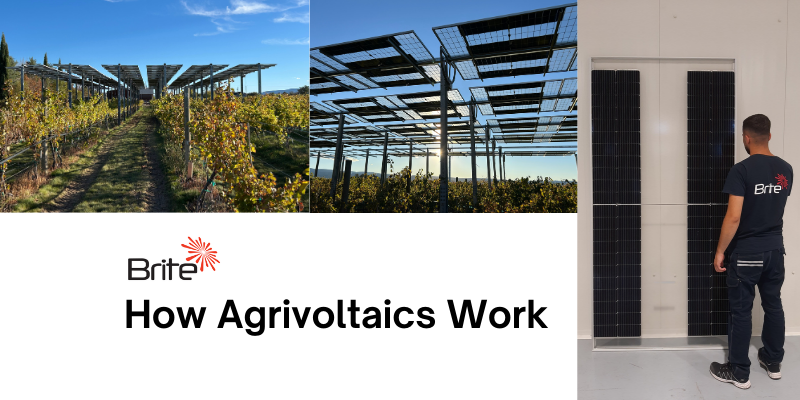
To understand how agrivoltaics work, it is important to see how agriculture and solar energy production can coexist on the same land. Instead of choosing between farming and energy generation, the same field can produce crops and electricity simultaneously.
This concept is known as dual land use and is becoming increasingly important as agriculture faces climate change, rising energy costs, and pressure to produce more food sustainably.
In agrivoltaic systems, solar panels are installed above or around crops, allowing farming activities to continue while renewable electricity is generated.
What Dual Land Use Means in Practice
The core principle of agrivoltaics is simple: the same agricultural land is used simultaneously for two purposes.
• Production of agricultural products
• Production of renewable electricity
Unlike traditional solar parks that occupy farmland completely, agrivoltaic systems allow cultivation underneath the solar panels.
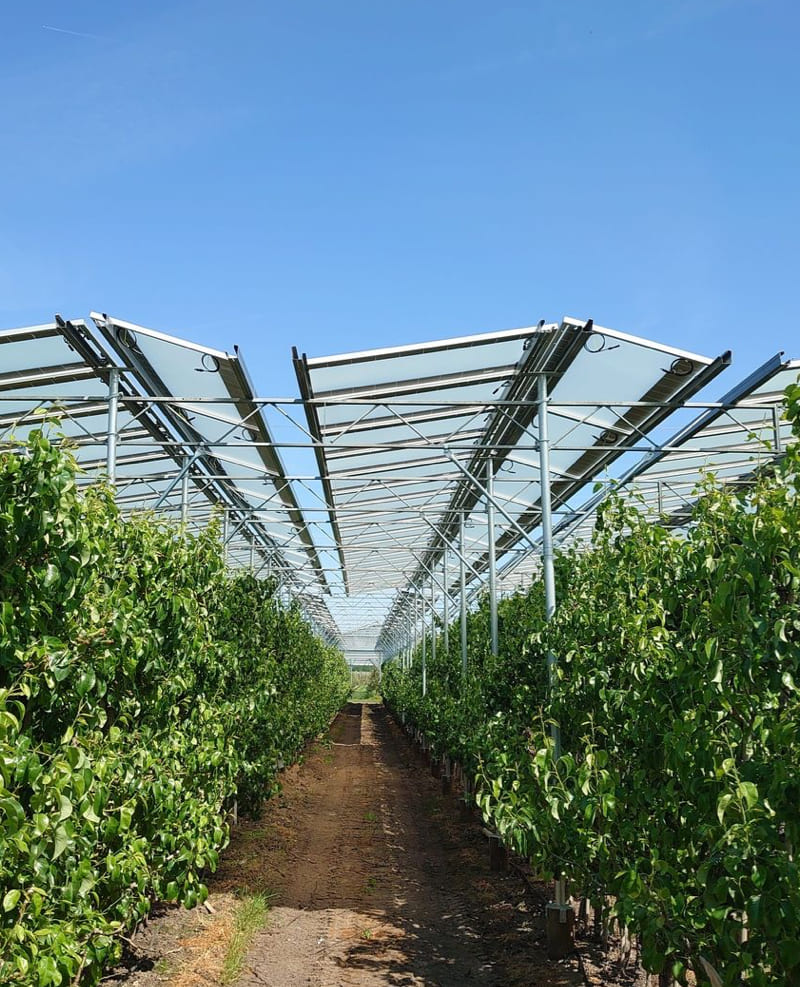
The structures are usually elevated, leaving enough space for farming machinery, irrigation systems, and crop growth.
This approach allows farmers to increase the productivity of their land without sacrificing agricultural activity.
How Agrivoltaics Work Technically
The agrivoltaic system operation follows the same electrical principles as conventional photovoltaic systems, but the design is adapted for agricultural environments.
The goal is to maintain a balance between energy production and crop development.
1. Sunlight Management
Modern agrivoltaic systems are designed to manage sunlight carefully.
Panels can be:
• Semi-transparent, allowing part of the sunlight to pass through to the crops
• Bifacial, capturing both direct and reflected sunlight
This allows plants to continue receiving the light needed for photosynthesis while solar cells generate electricity.
At Brite Solar, specifically, nanomaterials are used to increase the permeability of the glass and convert ultraviolet radiation into red light, which is more useful for photosynthesis.
Thus, the light is not "lost" but is used both for energy and for optimizing cultivation.
2. Electricity Generation
Solar cells convert sunlight into direct current (DC) electricity.
Then:
• An inverter converts DC electricity into alternating current (AC)
• The electricity can be used directly on the farm or fed into the grid
In many cases, the electricity produced helps power irrigation pumps, cooling systems, or agricultural equipment.
3. Crop Protection
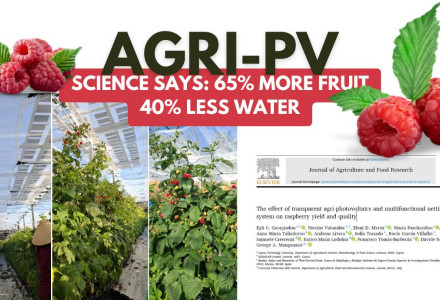
Besides energy production, agrivoltaic structures can provide partial shading for crops.
This shading may help:
• Reduce heat stress in plants
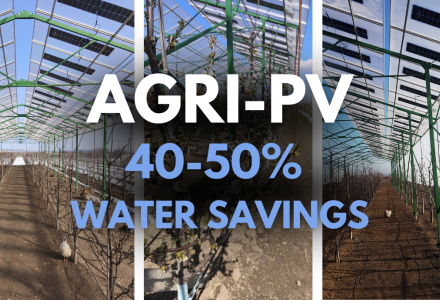
• Lower water evaporation from the soil
• Protect crops from extreme weather conditions
For many crops, controlled shading can support more stable growing conditions.
Types of Agrivoltaic Systems
Different types of agrivoltaic systems are used depending on the crop type and the farming environment.
Elevated Structures for Open-Field Crops
Panels are installed several meters above the ground, allowing tractors and other farming machinery to move freely underneath.
This approach is commonly used in vineyards, orchards, and vegetable crops.
Integration in Greenhouses
Solar panels can also be integrated directly into greenhouse roofs, allowing the greenhouse to produce electricity while maintaining suitable light conditions for plants.
Technical Characteristics That Influence System Performance
Several factors affect how agrivoltaic systems perform:
• Panel transparency
• Height and spacing of the structure
• Orientation of the panels
• Local climate conditions
• Crop type
Each agrivoltaic project typically requires a custom design to balance crop growth and energy generation.
For more technical details on the basic functioning of photovoltaics, see also the European Commission's guide to solar energy.
How Brite Solar Agrivoltaics Work
Brite Solar develops semi-transparent solar glass specifically designed for agricultural applications.
These panels allow sunlight to reach the crops while simultaneously producing renewable electricity.
The technology integrates advanced materials and precision manufacturing, enabling a solution that supports both agricultural productivity and clean energy generation.
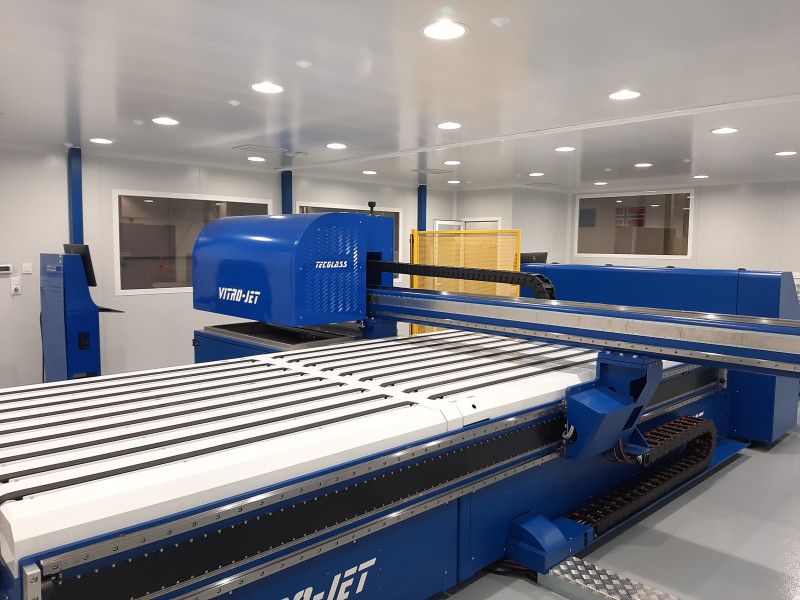
Patented Coating on the Solar Glass
Production begins with the front glass layer, where Brite Solar’s patented nanostructured coating is applied directly onto the glass surface.
This coating:
📍 Contributes to the conversion of ultraviolet radiation into light that is more useful for photosynthesis.
In this way, solar glass for agriculture does not simply function as a photovoltaic panel, but also as an active light-management component for crops.
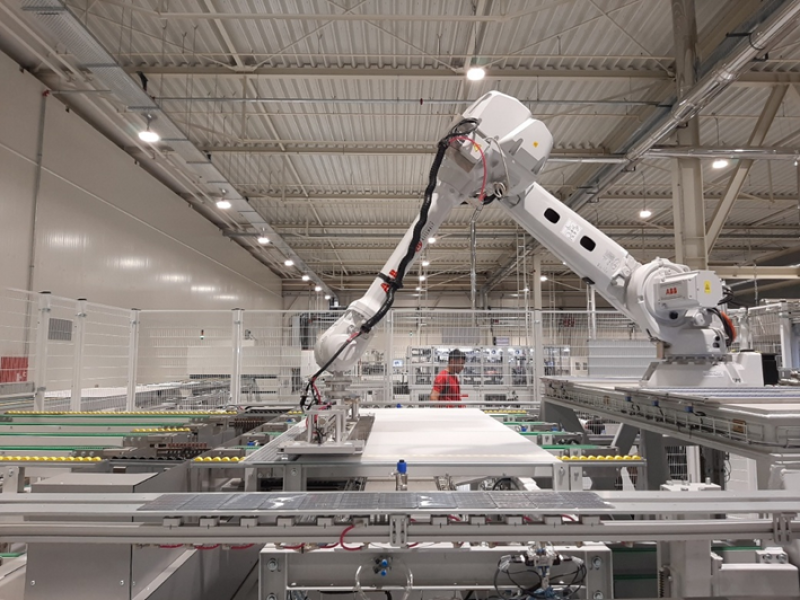
Solar Cell Placement and Adjustment of Transparency and Power
After the coating process, the first encapsulation film is applied, followed by the assembly of the solar cells.
The number and arrangement of the solar cells:
• Determine the transparency of the panel
• Define the final power output in kWp
• Can be adjusted according to the crop type and energy requirements
This means that the panel can be designed differently for vineyards, orchards, or other agricultural applications, achieving the right balance between light transmission for crops and energy production.
Lamination and Final Panel Construction
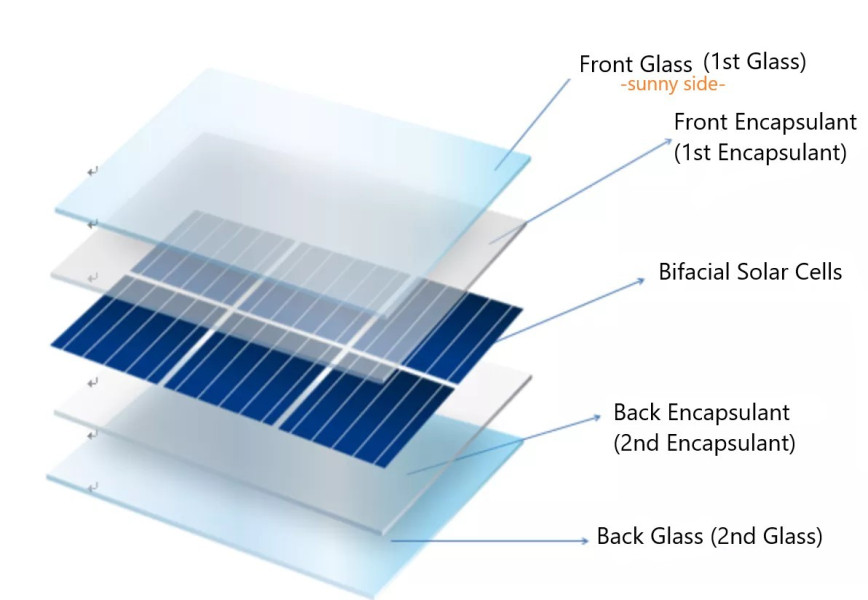
The final structure of the panel consists of the following layers:
glass – film – solar cells – film – glass
A lamination process is then applied so that all layers are fused into a single compact and durable structure. After lamination:
• An aluminum frame is installed
• The electrical connection box (junction box) is mounted
• Sealing and stabilization of the materials are completed
The result is a panel specifically designed for agricultural environments, with high mechanical durability.
Triple Quality Control for Maximum Reliability
Each panel undergoes three critical testing stages:
• EL testing to verify the quality of electrical connections
• Electrical performance measurement using a solar simulator
• Electrical insulation testing (Hi-Pot test)
This process ensures stable performance, reliability in the field, and safe operation within the electrical grid.
Brite Solar’s agrivoltaic panels have a lifetime of more than 25 years, providing long-term energy production while helping protect crops from extreme weather conditions.
Frequently Asked Questions About How Agrivoltaics Work
Do agrivoltaic solar panels reduce crop yields?
Not necessarily. In some cases, the partial shading created by solar panels may help stabilize growing conditions, depending on the crop and climate.
Can farmers continue normal farming operations?
Yes. Agrivoltaic systems are designed so that agricultural machinery and farming activities can continue underneath the structures.
How is the electricity used?
The electricity produced can be:
• Consumed directly on the farm
• Stored in batteries
• Fed into the electrical grid depending on the energy system used.
Find more agrivoltaic projects.
📞 Contact with Brite Solar
email: info@britesolar.com
phone: +30 2310 321342