The Greek Agri PV Pilot Shows the Future of Farming
🌱 Agrivoltaics in the field | Technology meets cultivation
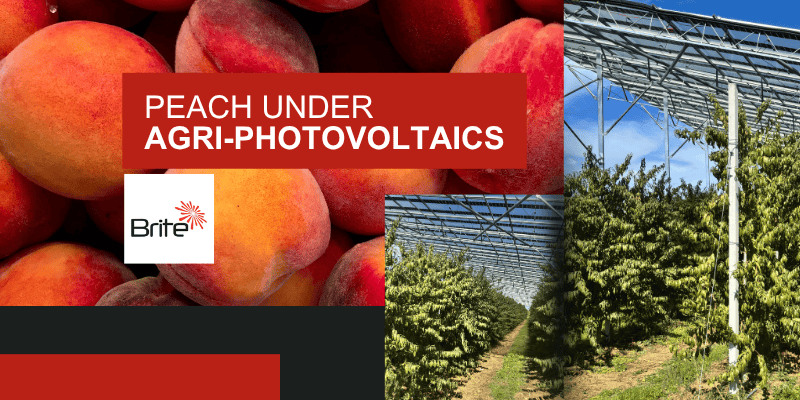
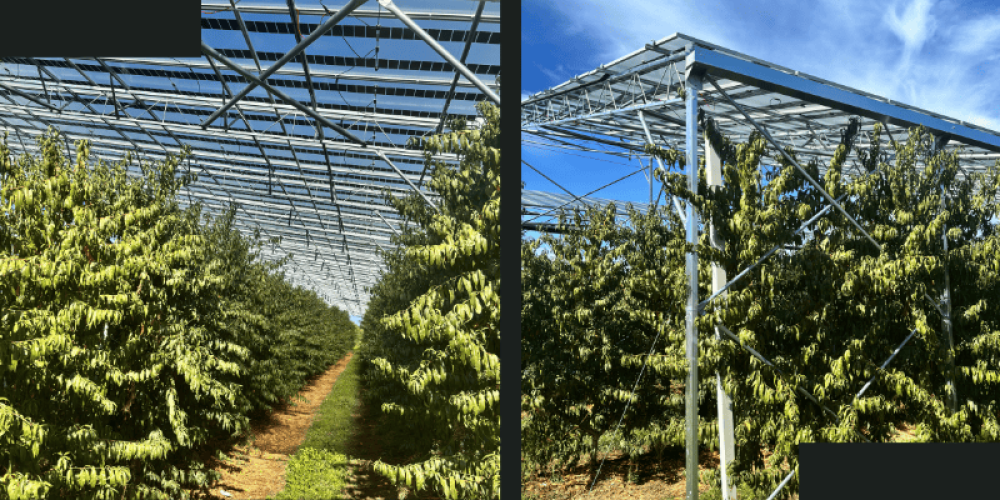
In Imathia, Greece, within a peach orchard, Brite Solar is putting into practice its vision for an agriculture that combines food production with clean energy generation. This project, a pilot installation of agrivoltaics (Agri-PV), demonstrates how solar panels in the field can create ideal growing conditions, protect plants from excessive radiation, and save water, all while producing green energy.
What we have achieved in Imathia is directly applicable to other high-tech agricultural markets. For a deeper look at how these systems are being implemented in northern climates, see our comprehensive Agrivoltaics Netherlands Guide.
The installation was carried out within the framework of the European SolarHub program, involving Brite Solar, the ARTEMIS Laboratory (CPERI/CERTH), CRES, and Venus Growers. The goal of the program is the development and evaluation of innovative agrivoltaic systems that enhance the sustainability of European agriculture.
Brite Solar’s Presence in Imathia
The pilot installation was implemented in collaboration with the grower Mr. Karaindros and Venus Growers, one of the most important peach producer associations in Greece. The combination of Brite Solar’s technological expertise with the agronomic experience of local producers highlights how innovation can work practically and effectively in the field.
The Agri-PV Workshop at CERTH | Collaborating for the Future
The Agri-PV Workshop, organized as part of the European SolarHub project, was successfully held at the facilities of CERTH and at the pilot plot in Imathia. The workshop brought together representatives from all key stakeholders: ARTEMIS Lab (CPERI/CERTH), CRES, Brite Solar, and Venus Growers.
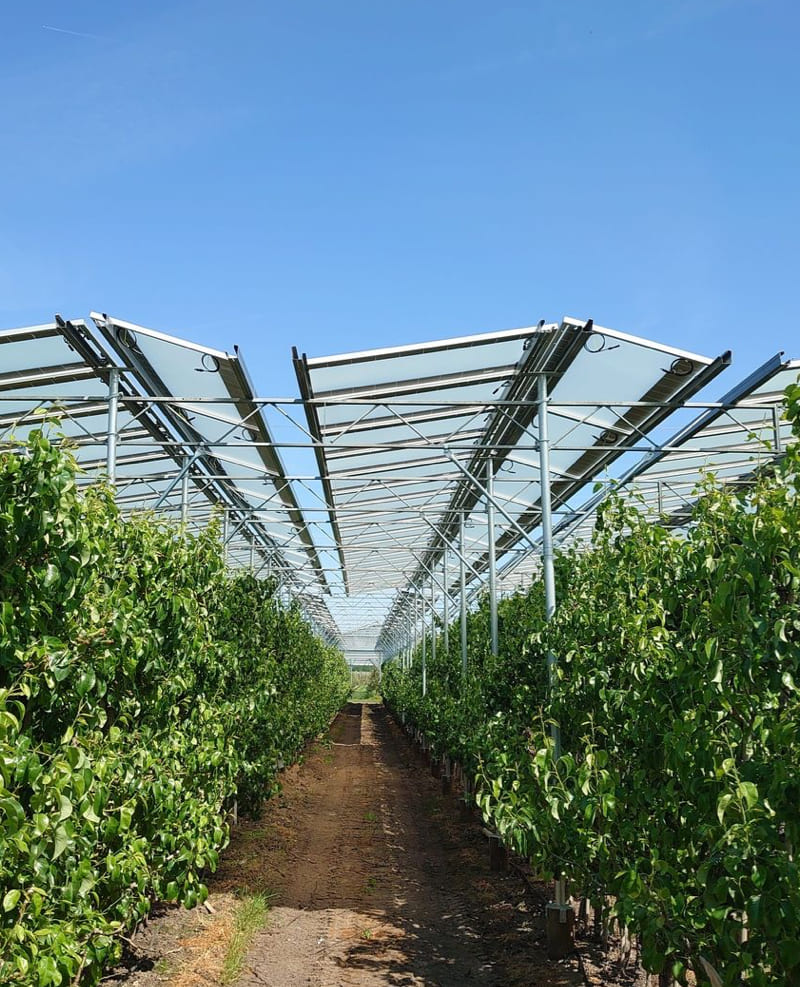
Participants had the opportunity to observe firsthand how Brite Solar’s panels function above the trees, offering protection and stability to the production. The workshop highlighted the core benefits of such agrivoltaic projects:
- Crop Protection: Safeguarding plants from excessive heat, wind, and intense radiation.
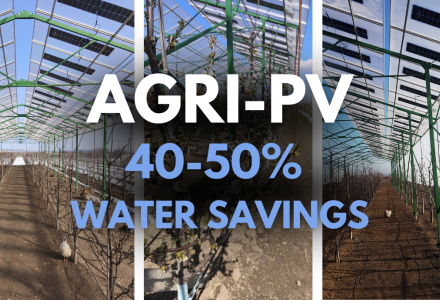
- Water Conservation: Significant water savings by reducing soil evaporation
- Green Energy: Clean power generation without requiring additional land use.

How Agrivoltaic Projects are Redefining Dual Land Use
In Imathia, Greece we changed the narrative. By installing our transparent solar glass over the peach trees, we have created a "dual-use" environment where the land works twice as hard. This is not just a solar park, it is a fully integrated agrivoltaic system designed to support the plant first and the energy needs second.
The project demonstrates that agrivoltaic systems are about more than just electricity, they are about optimizing the environment for the producer. The panels are engineered to manage light transmission, ensuring that the transition to green energy never comes at the cost of crop quality or volume.
Real-World Benefits: Energy Autonomy and Yield Stability
For the growers in Imathia, the transition to agrivoltaics farming has addressed critical challenges identified in modern agriculture:
🗝️Energy Autonomy: The system generates power and is connected directly to the grid.
🗝️Climate Protection: The solar glass structures act as a physical shield against extreme weather events like hail and intense heat, which are becoming increasingly common. For a deeper look at how these systems are protecting the crops from weather conditions, see our comprehensive example of Agrivoltaics in Open-Field Blueberry Cultivation, Netherlands
🗝️Operational Efficiency: By providing partial shade and temperature moderation, the panels prevent heat stress, ensuring consistent production even during volatile seasons.
Why Technology Choice Matters for Agrivoltaic Systems
Not all solar panels are suitable for the orchard. Traditional opaque panels block light, leading to stunted growth. The Imathia project succeeds because of Brite Solar’s unique modules. These panels are bifacial and transparent, designed specifically for the needs of the plant rather than just the energy grid.
With a lifespan of over 25 years, these systems represent a long-term infrastructure upgrade. They offer a durable alternative to temporary solutions like plastic covers or shade nets, providing a permanent shield that pays for itself through renewable energy production.
FAQ: Insights from the Field
What is the main benefit of agrivoltaic projects for farmers? Agrivoltaic systems allow for energy autonomy and crop protection on the same land.This dual-use approach stabilizes income through electricity generation while protecting crops from weather extremes
How does the system protect against extreme weather? The solar panels are designed to withstand significant hail impact and wind loads, acting as a robust canopy that prevents physical damage to sensitive fruit
Is the energy produced enough to power farm operations? Yes, depending on the installation size in kWp, the system can achieve near-total energy autonomy for critical needs like irrigation pumps.
📞 Contact with Brite Solar
🟥 Phone: +30 2310 321342
🟥 Email: info@britesolar.com