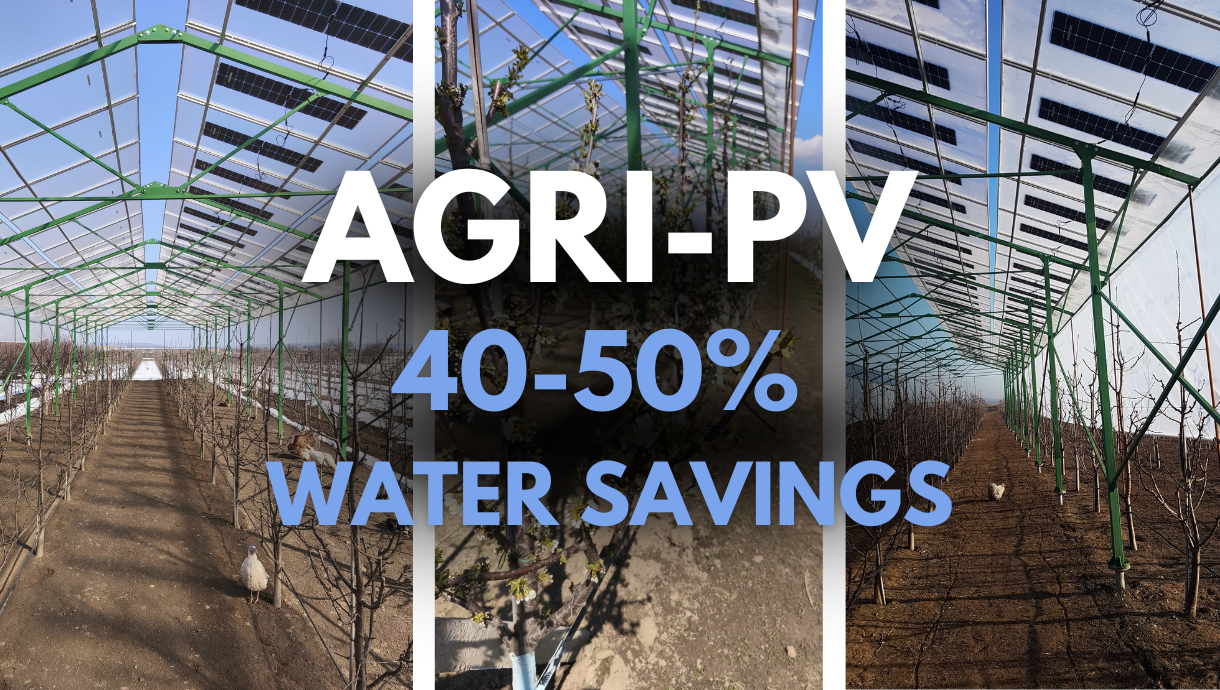
What happens when you place semi-transparent photovoltaic panels above a black bitter cherry orchard and combine them with IoT sensors and AI-driven irrigation? The experimental data coming out of a real hortivoltaic project are striking: 40 to 50% reduction in water consumption, larger fruit, and more vigorous stems. Here is what the numbers tell us.
‼️The Results‼️
The findings from the covered area versus the uncovered control area are clear and measurable across four distinct categories.
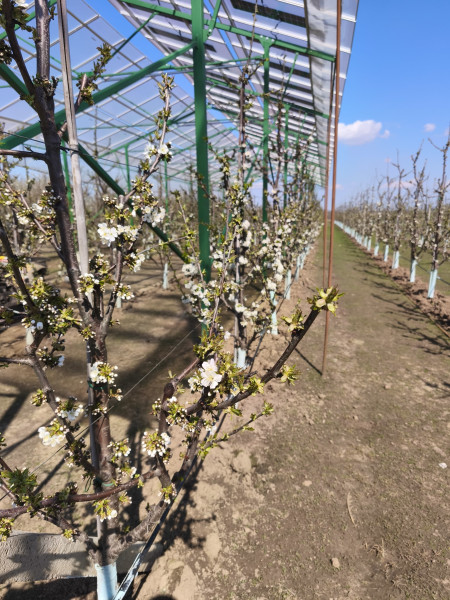
1. Larger Fruit and More Vigorous Stems
Bitter black cherries harvested from the area covered by semi-transparent photovoltaic panels are visibly larger and have longer stems than those from the uncovered area. This is a direct quality improvement with commercial value for growers selling premium fruit.
2. 40-50% Reduction in Water Consumption
The dynamic shading provided by the panels drastically reduces evapotranspiration at ground level. This water saving advantage is most visible precisely on days with extreme temperatures, the days when conventional orchards suffer most from water stress. A 40 to 50% reduction in irrigation needs is not a marginal gain. For fruit growers facing rising water costs and drought pressure, it is a structural change in how the orchard operates.
3. A Different Thermo-Hydraulic Profile Under the Panels
Analysis of temperature and humidity variation curves in the soil reveals a distinct thermo-hydraulic profile in the covered experimental area. The data from sensors at 35 cm and 45 cm depth demonstrate measurably different soil moisture and temperature dynamics under the panels compared to the open area. This profile can be modelled to deliver superior orchard management performance over time.
4. Predictive Management Through Artificial Intelligence
AI algorithms process humidity and temperature values in the root zone in real time. The Tamiatics controller automatically calculates the optimal irrigation and fertigation windows, delivering water and nutrients precisely when the Silva6 rootstock can absorb them most efficiently. The result is zero waste and the elimination of deep fertilizer leaching, a significant agronomic and environmental benefit.
Why Semi-Transparent Panels Make the Difference
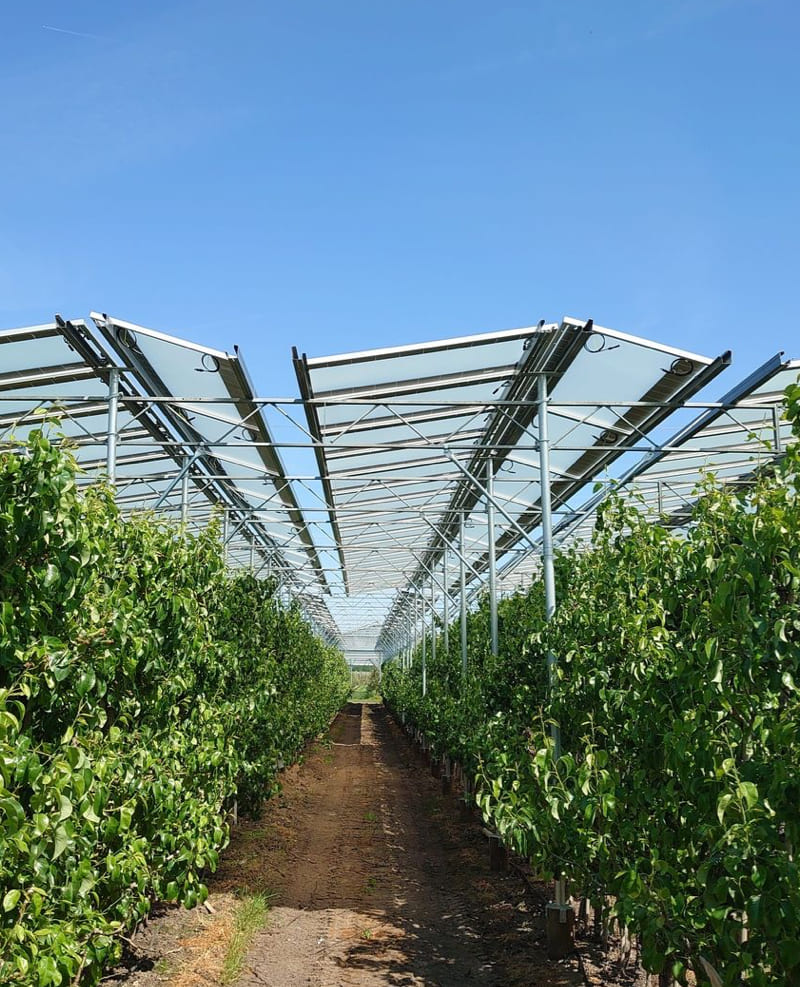
Not all solar panels produce these results. The key is the semi-transparency of Brite Solar's agrivoltaic panels. Rather than blocking light entirely, they transmit a calibrated portion of the solar spectrum to the crop below while converting the rest into electricity.
This precision matters because every crop is different. Transparency levels, panel height, and mounting structure are not fixed specifications, they are defined project by project, based on the specific light requirements of the crop, the local climate conditions, and the operational needs of the farmer. A bitter cherry orchard in Romania requires a different configuration than a vineyard in Northern Greece or a nectarine orchard in the mountains of Cyprus.
The Bigger Picture: Climate Resilience for High-Value Fruit Crops
In the current context of heat waves and water scarcity, efficient water management is a critical condition for the economic survival of orchards. The bitter cherry project demonstrates that a digitised hortivoltaic space can radically transform the climate resilience of high-value fruit crops, providing real-time data to the farmer and improving every aspect of orchard management performance.
The project is actively looking for new development and research partners, fruit growers, agro-tech technology providers and investors interested in the synergy between clean energy and precision agriculture. If that describes you, visit the project website or reach out directly to the team.
At Brite Solar, results like these confirm what we have been building toward: agrivoltaic technology that does not ask farmers to choose between energy and agriculture, but delivers both alongside measurable improvements in crop quality, water efficiency and climate resilience.
Interested in exploring agrivoltaics for your orchard or crop? Get in touch with our team for a personalised technical assessment.
All data and findings in this article are sourced from Dragos Ofrim, PhD — General Manager, InterNET SRL, OFRIM Group | hortivoltaics.ro
Nerantzaki Kiki
10/06/2026